Index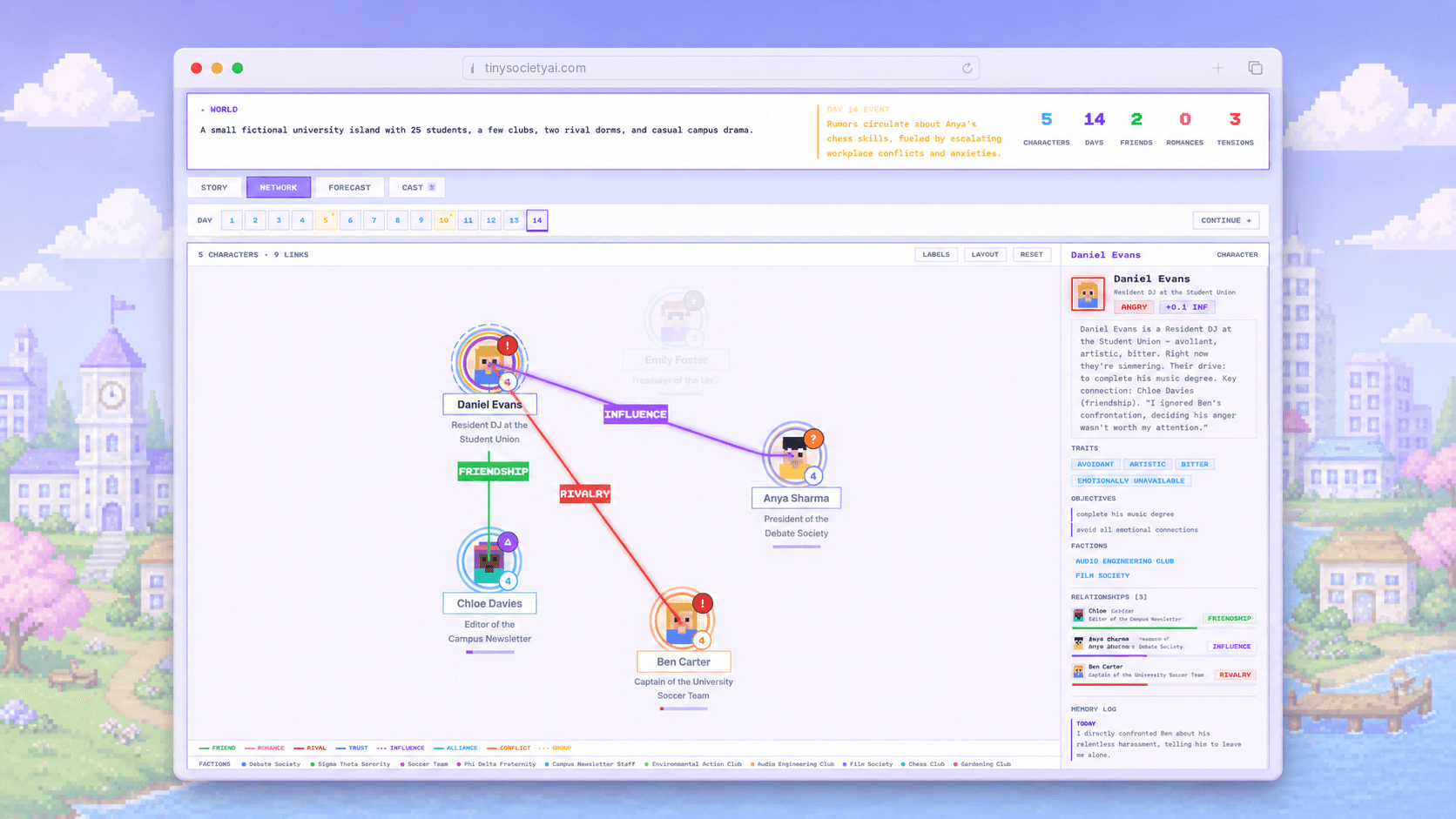

 Back to home
02
05 totalSelected Work
Tiny Society
- A multi-agent AI social simulation and prediction engine, where AI agents observe, remember, reflect, and shift opinions over 7 to 30+ simulated days, then forecast where the world is heading.
- Built with Next.js, FastAPI (Server-Sent Events), a Python generative-agents engine, and optional Supabase saves with JWT auth.
- A consequence layer converts LLM social intents into calibrated affinity changes, giving relationships real inertia instead of model-written numbers.
Next.jsTypeScriptReact FlowD3 ForceFastAPIPydanticSupabaseServer-Sent Events
 Website
 Source
LaunchPilot
- A two-time winning project at Hack Canada 2026 that moves a product from a brief or GitHub repo into a supervised, multi-agent launch workflow.
- Built with Next.js, FastAPI, SQLAlchemy, Alembic, and Postgres, with a Backboard memory layer giving each agent persistent context across runs.
- Maps competitors and pain points, generates ICP and messaging, builds a 7-day execution plan, and prepares outreach leads batched for approval.
Next.jsTypeScriptAuth0FastAPISQLAlchemyAlembicPostgreSQLResend
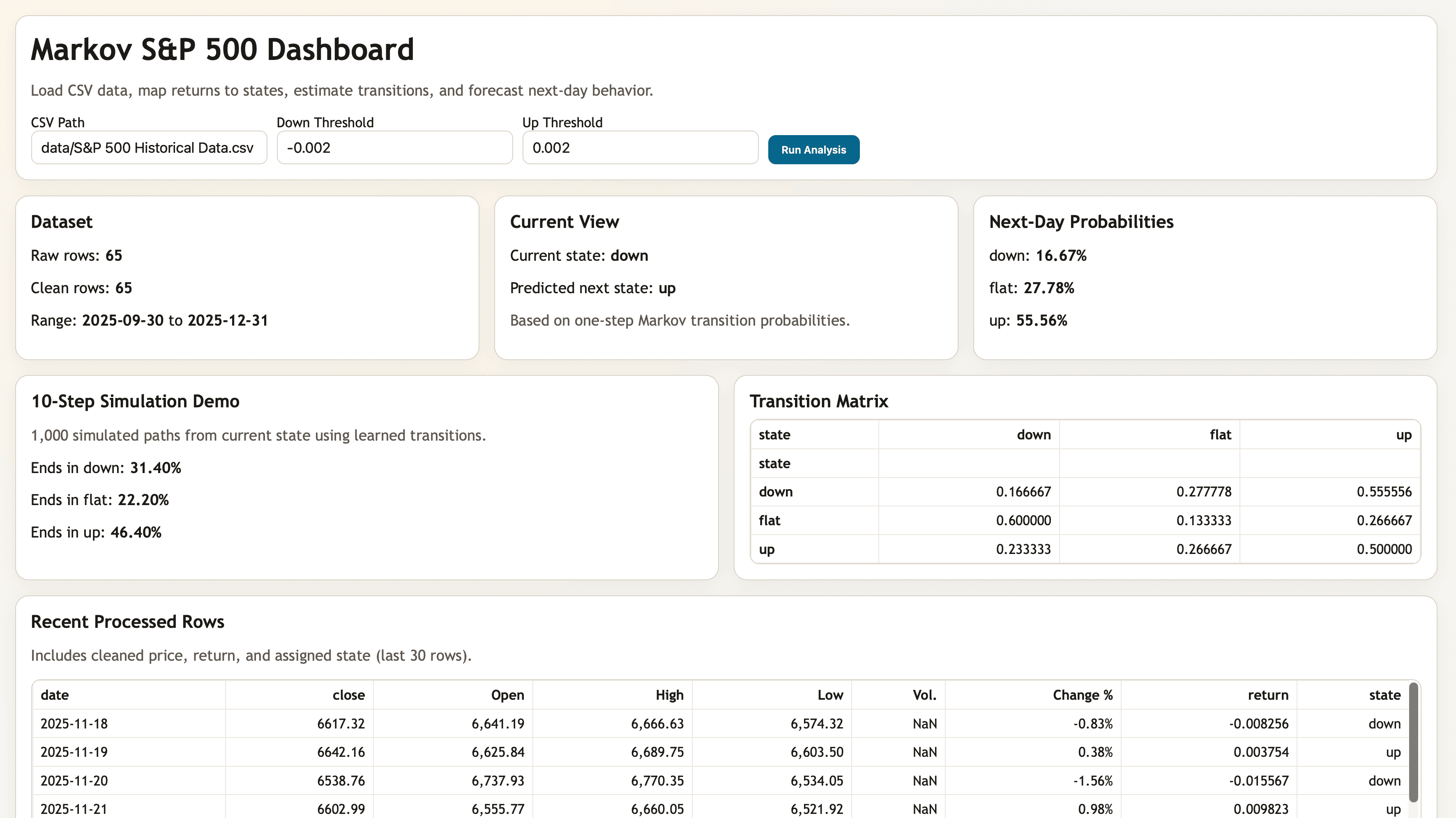
Markov Chain Model for Market Regime Forecasting
- A modular Python app that models daily equity return regimes (down/flat/up) with a first-order Markov chain and forecasts next-day state probabilities.
- Cleans price data, computes returns, discretizes regimes, and builds a row-normalized transition matrix for conditional next-state probabilities.
- Ships a CLI report tool and a Flask dashboard with threshold tuning, Monte Carlo simulation, and unit tests for the transition logic.
PythonpandasNumPyFlaskMarkov ChainsMonte Carlo
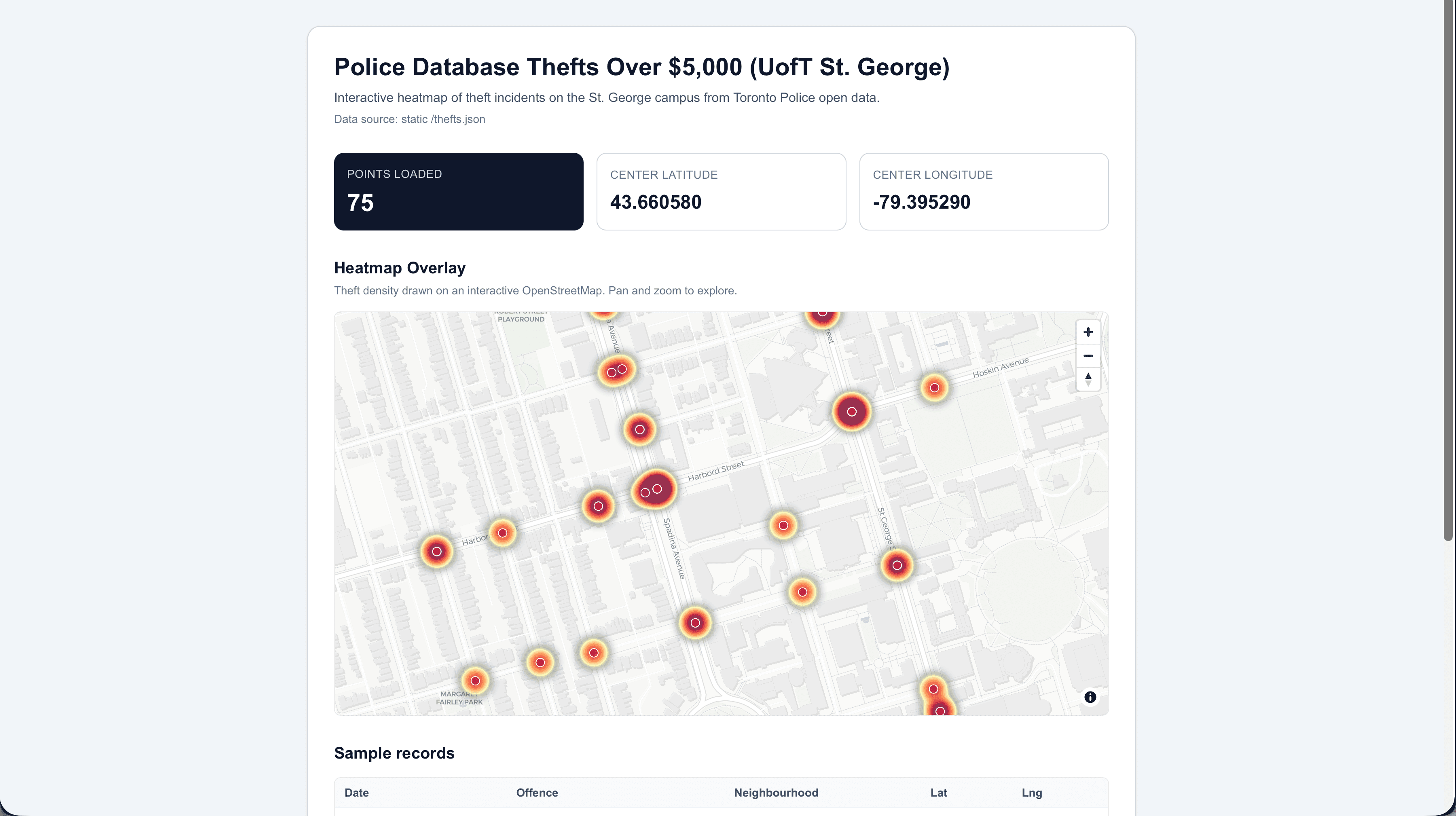
Heat Mapping $5,000+ Thefts Around UofT (St. George)
- A full-stack crime intelligence app that maps Toronto Police theft-over-$5,000 incidents around the UofT St. George campus, built after my own laptop was stolen on campus.
- A Python/FastAPI pipeline filters police records by campus geospatial boundaries, normalizes the data in SQLite, and serves a clean API.
- A Next.js/TypeScript frontend renders an interactive OpenStreetMap heatmap with live summary metrics and incident sample tables.
Next.jsTypeScriptTailwind CSSMapLibre GLFastAPIPydanticSQLiteOpenStreetMap
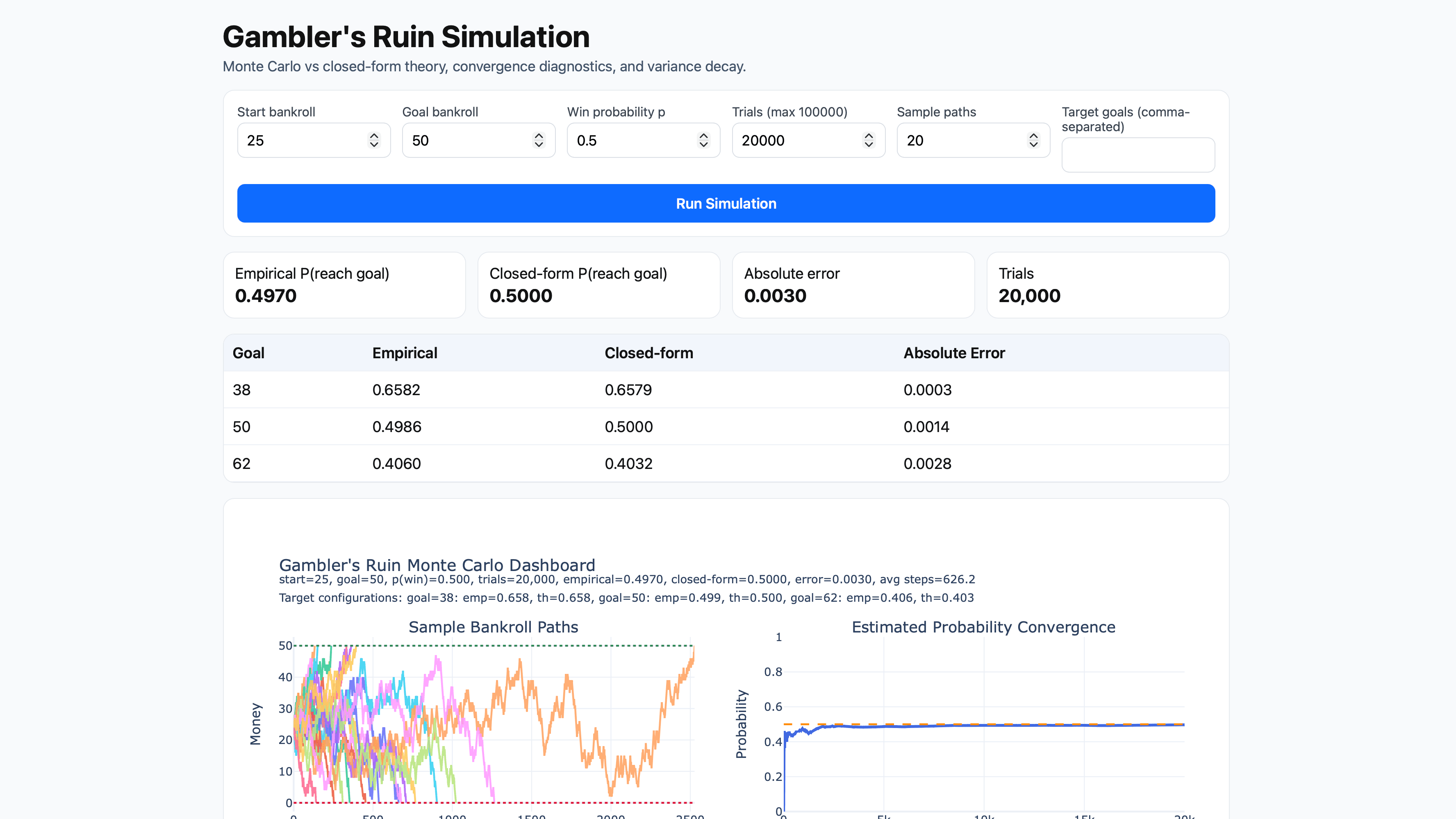
Stochastic Risk Modeling: Gambler's Ruin Simulation
- A Gambler's Ruin simulation platform in Python that combines Monte Carlo experimentation with closed-form probability analysis to validate outcomes against theory.
- Organized as a reusable package (simulation, analytics, visualization, CLI, web) supporting up to 100k trials per run with Flask and Streamlit workflows.
- Includes convergence diagnostics, empirical-vs-theoretical error tracking, and an interactive Plotly dashboard for reproducible analysis.
PythonNumPyFlaskStreamlitPlotlyMonte Carlo